
Conversation Topic
4G LTE and 4GX Routers
Choose the right LTE class and feature set for dependable connectivity without paying for capacity the application does not require.
Useful questions, comparisons, examples and next-step checks around 4G LTE and 4GX Routers.
Questions & Answers
Answers About 4G LTE and 4GX Routers
These answers organise the topic into practical checks, comparisons and useful research notes.
On-site data to collect includes which carriers work there, which 4G/5G bands are available, and real signal quality metrics (updatesI, SINR, observed throughput) at the router location. Note any obstacles like walls or metal structures that affect reception. Usage profile matters: list every device and interface (LAN, Wi‑Fi, serial, GPIO), expected data volumes (peak vs average), and what needs remote access or VPNs. Also capture uptime requirements and f…
2026-09-08 What specific site details should I gather to compare 4G and 5G options effectively?To compare 4G and 5G sensibly, start with what your site needs today and what it may need tomorrow. Gather data on typical and peak data use, how many devices and interfaces will connect, and whether you require VPN or remote management. Also capture uptime targets and how quickly you must recover after a link outage. Then verify carrier coverage and the bands available at the site, because 5G benefits depend on the network and hardware supporting the righ…
2026-09-05 How can I measure actual upstream capacity at a site before buying?Do a live-site throughput test. Measure sustained upload, latency and packet loss at the installed antenna position during typical busy periods. Run a short pilot with expected camera data patterns, log data usage, and model how many devices share the uplink and what headroom you need. Ask Comset to verify the bands and SIM service for the chosen model and confirm the plan supports remote-management features.
 3 Q&A
Network Management and Fleet Monitoring
3 Q&A
Network Management and Fleet Monitoring
 3 Q&A
SMS Control Alerts and Automation
3 Q&A
SMS Control Alerts and Automation
 4 Q&A
Serial GPIO and Relay Integration
4 Q&A
Serial GPIO and Relay Integration
 3 Q&A
Power over Ethernet Deployments
3 Q&A
Power over Ethernet Deployments
 3 Q&A
Cellular Antennas and MIMO
3 Q&A
Cellular Antennas and MIMO
In practice, the choice comes down to actual traffic and growth expectations. Cat 4 can meet many sites’ needs, while Cat 6 adds headroom through carrier aggregation where available. Real results depend on the carrier, tower load, signal quality and antenna setup, so headline speeds aren’t everything. On-site checks to guide a decision include quantifying current data use and peak load, listing every device that will connect and the required interfaces (LA…
2026-08-23 What exact criteria should we use to decide between 4G and 5G for our site?Deciding between 4G and 5G should be based on real-world needs, not just speed. Consider the actual data use, number of devices and interfaces required, uptime requirements, and whether VPN or remote management are needed. If the application is dependable but low to moderate bandwidth, a well-chosen 4G/4GX setup may meet the need more cost-effectively and with proven reliability. If higher capacity, more simultaneous connections, or future growth are likel…
2026-08-22 How do I decide when to stay on 4G or move to 5G for my site?Deciding between staying with 4G or moving to 5G depends on what your site actually needs. 4G remains reliable where coverage is good, and many deployments use Band 28 effectively for reach and indoor penetration. 5G can offer higher capacity where the local network is strong, but it also brings cost, device compatibility, and coverage considerations that don’t always make it the right choice yet. The key is to match the network to your real data use, upti…
 3 Q&A
Antenna Placement and Coaxial Cable Loss
3 Q&A
Antenna Placement and Coaxial Cable Loss
 10 Q&A
Cell Tower Location and Signal Testing
10 Q&A
Cell Tower Location and Signal Testing
 5 Q&A
Australian Carrier Bands and Compatibility
5 Q&A
Australian Carrier Bands and Compatibility
 10 Q&A
Router Comparison and Model Selection
10 Q&A
Router Comparison and Model Selection
 7 Q&A
Machine-to-Machine and IoT Connectivity
7 Q&A
Machine-to-Machine and IoT Connectivity
Compare 4G LTE and 4GX Routers against the intended use rather than one headline feature. Weigh suitability, quality, practical effort, timing, support, total cost, limitations and the evidence available, then decide which differences would materially change the outcome. Industrial 4G LTE and 4GX router options for reliable business, machine-to-machine and remote-site connectivity where 5G is unnecessary, unavailable or uneconomic. The category covers LTE …
2026-07-15 Is 4G still a sensible choice for remote monitoring, backup internet and ordinary business use?Absolutely. 4G is still the right answer for a large number of Australian deployments. It remains well suited to backup internet, remote monitoring, alarms, telemetry, light CCTV and everyday business connectivity where the application does not need cutting-edge speeds. In many places the most important factors are still Band 28 support, good antenna design, stable failover behaviour and sensible remote management. Comset’s 4G range is relevant precisely …
2026-07-15 What does 4GX actually mean in practical terms for a customer?In practical terms, 4GX usually refers to support for carrier capabilities such as Band 28 and improved LTE performance, particularly on Australian networks where that band is widely used for broader coverage. For the customer, the takeaway is not the marketing label itself but whether the router supports the bands and LTE category that suit the local network and the expected use. Comset generally treats 4GX as part of the compatibility conversation. If a…
 7 Q&A
Industrial Automation Connectivity
7 Q&A
Industrial Automation Connectivity
 3 Q&A
Building Automation Connectivity
3 Q&A
Building Automation Connectivity
 7 Q&A
Security and Surveillance Connectivity
7 Q&A
Security and Surveillance Connectivity
 3 Q&A
Mining Energy and Remote Sites
3 Q&A
Mining Energy and Remote Sites
 5 Q&A
Transport Fleet and Mobile Deployments
5 Q&A
Transport Fleet and Mobile Deployments
4GX is Telstra’s marketing name for parts of its LTE network, particularly services using Band 28 at 700 MHz. Low-frequency spectrum can travel further and penetrate buildings better than many higher-frequency bands, so Band 28 support can be valuable at regional, indoor or fringe-coverage sites. It is not a guarantee of good service. Tower configuration, terrain, congestion, antenna placement and the carrier’s local network all affect the result. A route…
2026-05-24 How can a business avoid paying for 5G capacity when the application only needs dependable low-to-moderate bandwidth?Begin by calculating what the application actually sends and receives. A pump controller, environmental sensor or alarm may use only small messages, while cameras, cloud backups and many users can require far more capacity. If the normal and peak demand fits comfortably within a proven 4G connection, paying for 5G hardware and a larger data plan may not improve the operation. Choose the smallest class of router that still provides the required reliability…
2026-05-23 Is a Cat 4 or Cat 6 industrial router still sufficient for many business and machine-to-machine applications?Yes. Cat 4 and Cat 6 industrial routers remain suitable for many business and machine-to-machine jobs. Cat 4 can provide up to the class’s theoretical 150 Mbps download rate, while Cat 6 can support higher theoretical throughput through carrier aggregation, but actual results depend on the carrier, tower load, signal quality, antennas and site conditions. Many applications use far less bandwidth: telemetry, PLC data, alarms, EFT or point-of-sale backup, r…

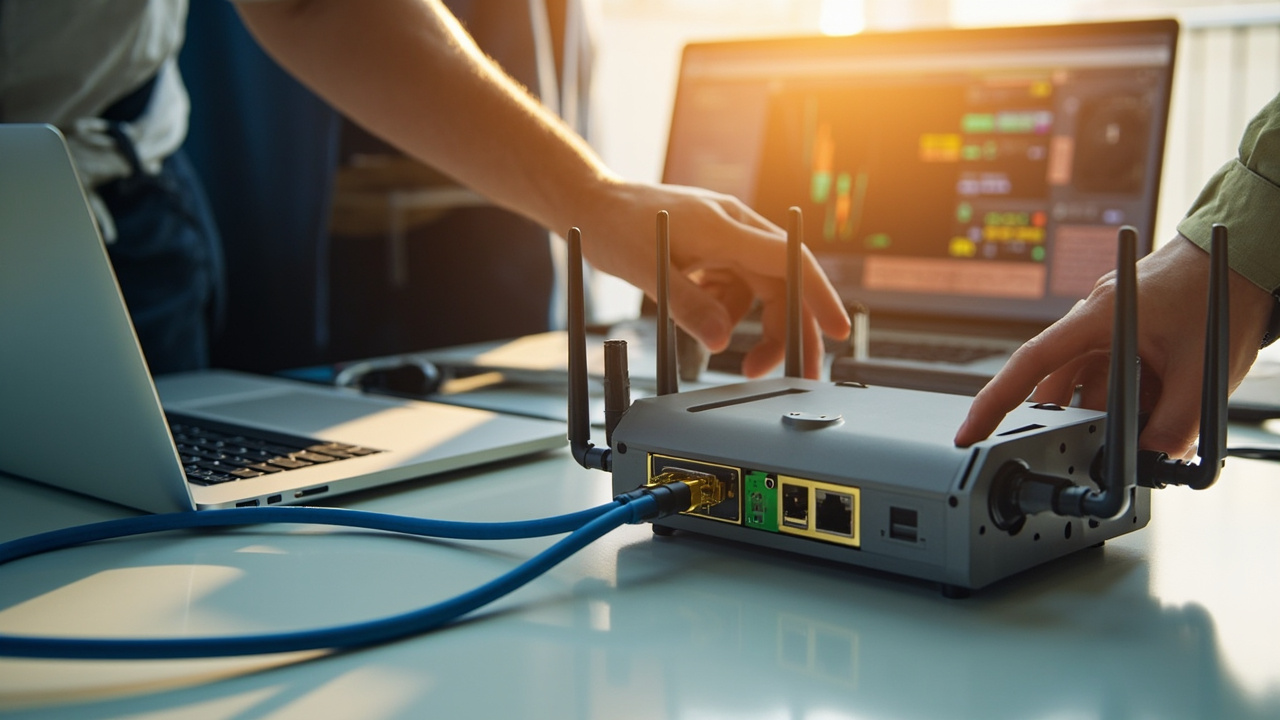


Visual Examples
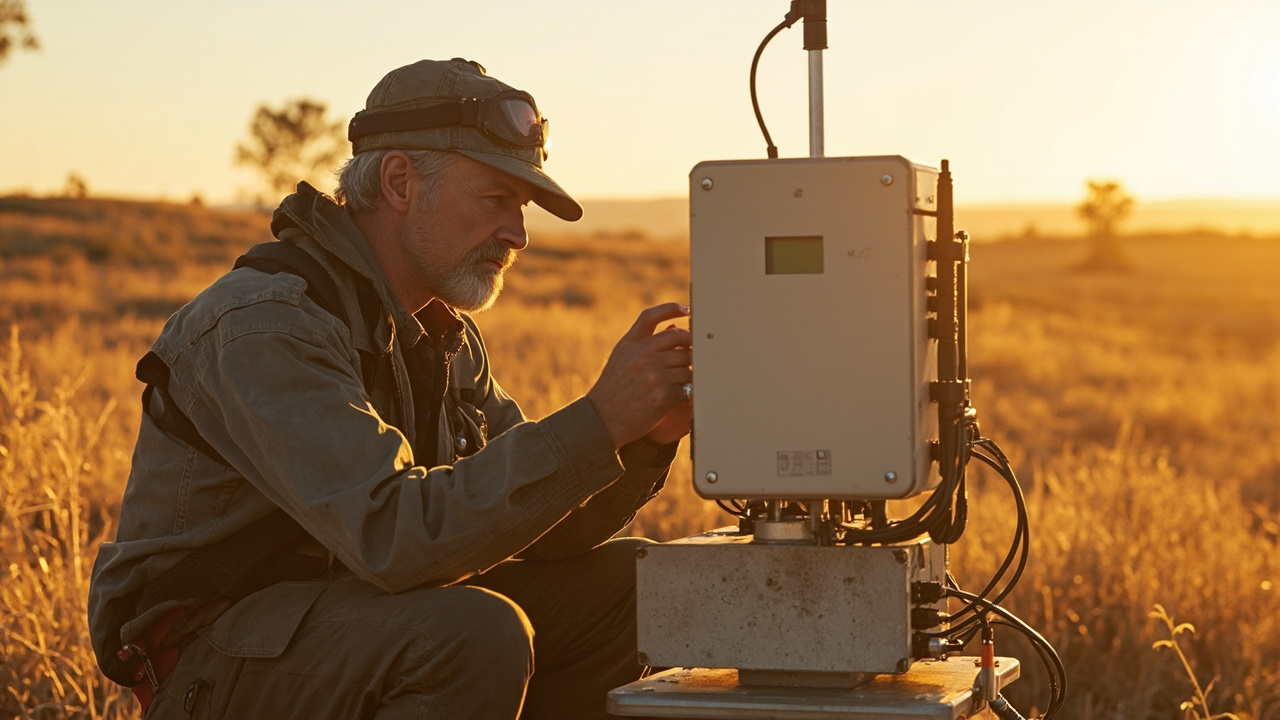
Images That Support 4G LTE and 4GX Routers
A small visual sample connected to this topic.