
Questions & Answers
Public Questions & Answers
The Conversation Around Comset
These pages turn the business source material into practical answers, comparisons, visual examples and confirmation points for people researching this business.
Cellular backup should be treated as a separate service that is tested regularly. Configure the router to check reliable internet targets, not only the physical WAN link, and set sensible failure and recovery timers. Confirm the backup SIM is active, has data available and uses the correct APN. Test by disconnecting the primary service and by simulating a situation where the NBN modem stays powered but cannot reach the internet. Verify that critical appli…
Cellular Backup for NBN and Fixed WAN · 2026-05-29 Which traffic should be limited or prioritised while a site is operating on cellular backup?Prioritise the services that keep the business operating: voice, payments, essential cloud applications, alarms, remote support and operational telemetry. Large backups, operating-system updates, guest Wi-Fi, entertainment traffic and non-urgent file synchronisation can quickly consume a mobile allowance or congest the backup path. Traffic shaping, separate VLANs, firewall rules or application policies can be used to restrict lower-priority use while the …
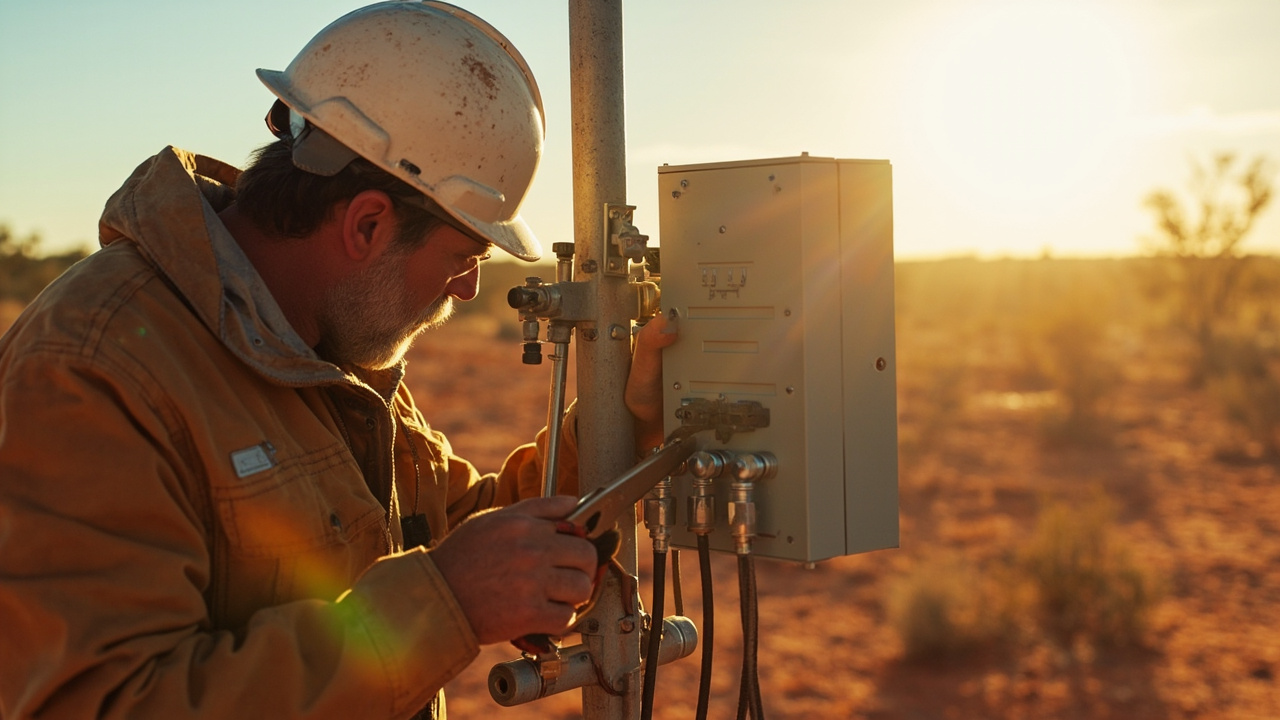
Outdoor Routers and Harsh Environments · 2026-05-28 When is it better to place an industrial router inside a protected enclosure rather than use an integrated outdoor router?A protected enclosure is often better when the site needs several devices, batteries, power conversion, surge protection or easy service access in one location. It can also allow the router to be kept out of direct sun and corrosive weather while using an external antenna in the best position. An integrated outdoor router is attractive when antenna cable loss would otherwise be high, when Ethernet can be run back to the network, or when there is no practi…
 3 Q&A
Power over Ethernet Deployments
3 Q&A
Power over Ethernet Deployments
 3 Q&A
Cellular Antennas and MIMO
3 Q&A
Cellular Antennas and MIMO
 3 Q&A
Antenna Placement and Coaxial Cable Loss
3 Q&A
Antenna Placement and Coaxial Cable Loss
 10 Q&A
Cell Tower Location and Signal Testing
10 Q&A
Cell Tower Location and Signal Testing
 5 Q&A
Australian Carrier Bands and Compatibility
5 Q&A
Australian Carrier Bands and Compatibility
The IP rating is only one part of outdoor suitability. Also consider the operating-temperature range, humidity and condensation, UV exposure, salt or corrosive atmosphere, vibration, dust, water-entry points and the enclosure’s ability to shed heat. The router’s power input and surge protection are important where solar systems, vehicles or long outdoor cable runs are involved. Check mounting, cable glands, antenna connectors and whether the SIM or reset …
Outdoor Routers and Harsh Environments · 2026-05-27 How can heat, condensation, unstable power and electrical surges affect an outdoor cellular installation?Heat can shorten component life and may cause a modem to throttle or reset. Condensation can create corrosion or leakage paths even when direct rain never enters the enclosure. Unstable voltage can produce repeated reboots, while transients from long power or antenna cables can damage the router and attached equipment. Use a power supply with adequate capacity and the correct voltage range, allow ventilation or thermal management, and avoid sealing a heat…
Dual SIM and Carrier Redundancy · 2026-05-26 Can two SIM cards on the same carrier provide meaningful redundancy?Two SIMs on the same carrier can protect against a damaged SIM, an account problem or a plan-specific issue, but they usually share much of the same tower and core network infrastructure. That means they provide less geographical and network diversity than SIMs from different carriers. Same-carrier dual SIM can still be useful where one service has a different APN, billing arrangement or priority, or where operational simplicity matters. For stronger redu…
 10 Q&A
Router Comparison and Model Selection
10 Q&A
Router Comparison and Model Selection
 7 Q&A
Machine-to-Machine and IoT Connectivity
7 Q&A
Machine-to-Machine and IoT Connectivity
 7 Q&A
Industrial Automation Connectivity
7 Q&A
Industrial Automation Connectivity
 3 Q&A
Building Automation Connectivity
3 Q&A
Building Automation Connectivity
 7 Q&A
Security and Surveillance Connectivity
7 Q&A
Security and Surveillance Connectivity
Test both SIMs independently first. Confirm that each registers, receives the expected APN, passes traffic and can reach the services the site actually uses. Record signal-quality readings and data performance at the installed antenna position, not only on a workbench. Then simulate failures: block the health-check target, remove the primary WAN, disable mobile data, create a weak-signal condition if practical and verify the router changes paths within th…
Dual SIM and Carrier Redundancy · 2026-05-25 Does a dual-SIM router automatically provide reliable failover, or does the switching behaviour still need to be configured?No. Dual SIM gives the router two services to choose from, but reliable failover depends on how the router tests the active connection and when it is told to switch. A SIM can remain registered to a tower while internet access is unusable, so checking only registration or signal strength may not detect a real outage. The configuration should define health-check targets, failure thresholds, retry timing, preferred SIM, data limits and the conditions for re…
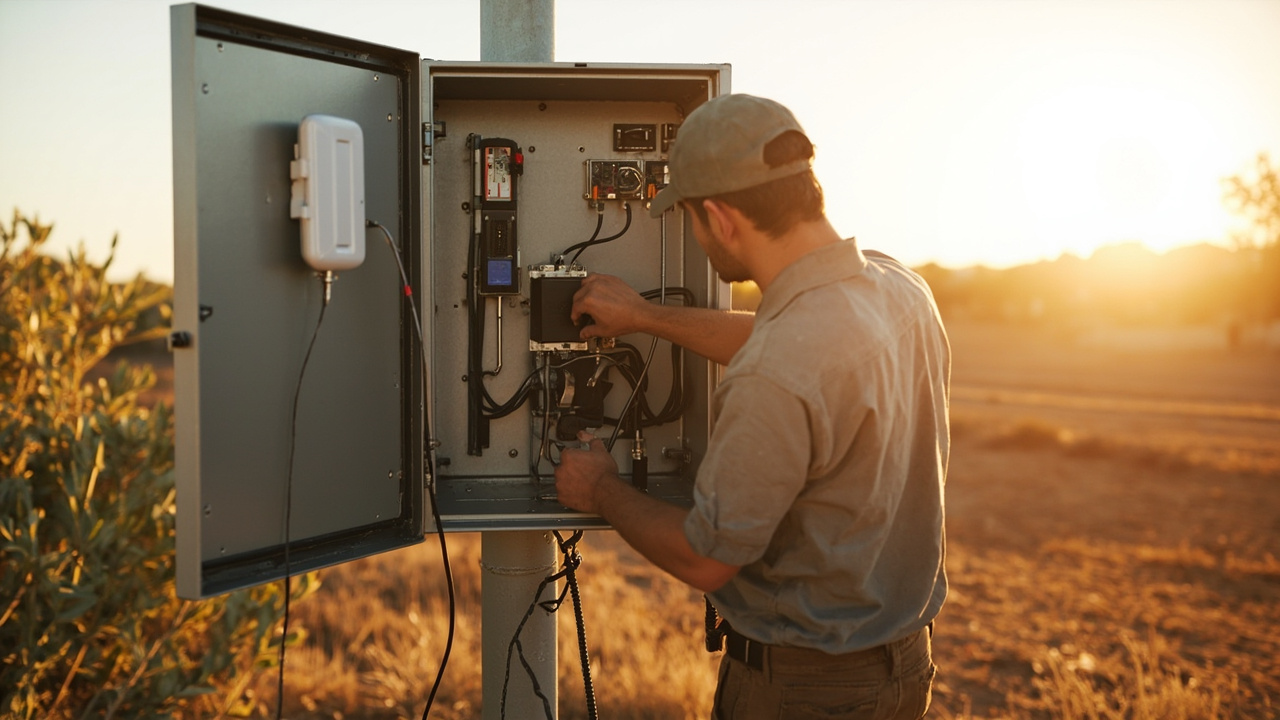
4G LTE and 4GX Routers · 2026-05-24 What practical difference can 4GX and Band 28 support make at an Australian site?4GX is Telstra’s marketing name for parts of its LTE network, particularly services using Band 28 at 700 MHz. Low-frequency spectrum can travel further and penetrate buildings better than many higher-frequency bands, so Band 28 support can be valuable at regional, indoor or fringe-coverage sites. It is not a guarantee of good service. Tower configuration, terrain, congestion, antenna placement and the carrier’s local network all affect the result. A route…
 3 Q&A
Mining Energy and Remote Sites
3 Q&A
Mining Energy and Remote Sites
 5 Q&A
Transport Fleet and Mobile Deployments
5 Q&A
Transport Fleet and Mobile Deployments
 5 Q&A
Marine and Vessel Connectivity
5 Q&A
Marine and Vessel Connectivity
 4 Q&A
Environmental and Agricultural Monitoring
4 Q&A
Environmental and Agricultural Monitoring
 9 Q&A
Router Setup APN and Configuration
9 Q&A
Router Setup APN and Configuration
Begin by calculating what the application actually sends and receives. A pump controller, environmental sensor or alarm may use only small messages, while cameras, cloud backups and many users can require far more capacity. If the normal and peak demand fits comfortably within a proven 4G connection, paying for 5G hardware and a larger data plan may not improve the operation. Choose the smallest class of router that still provides the required reliability…
5G Industrial Routers · 2026-05-23 Which Ethernet, Wi-Fi or antenna limitations can prevent a site from receiving the expected benefit from 5G?A site may have an excellent 5G signal and still see disappointing results if another part of the system is the bottleneck. A router with a 100 Mbps Ethernet port cannot pass multi-hundred-megabit traffic to a wired device. Older Wi-Fi standards, crowded radio channels, slow switches, weak client devices or a limited data plan can have the same effect. Antenna choice and placement are equally important. 5G may require multiple correctly connected MIMO ant…
4G LTE and 4GX Routers · 2026-05-23 Is a Cat 4 or Cat 6 industrial router still sufficient for many business and machine-to-machine applications?Yes. Cat 4 and Cat 6 industrial routers remain suitable for many business and machine-to-machine jobs. Cat 4 can provide up to the class’s theoretical 150 Mbps download rate, while Cat 6 can support higher theoretical throughput through carrier aggregation, but actual results depend on the carrier, tower load, signal quality, antennas and site conditions. Many applications use far less bandwidth: telemetry, PLC data, alarms, EFT or point-of-sale backup, r…
 7 Q&A
Firmware Diagnostics and Troubleshooting
7 Q&A
Firmware Diagnostics and Troubleshooting
 9 Q&A
Comset Supply Support Warranty and Resellers
9 Q&A
Comset Supply Support Warranty and Resellers
 12 Q&A
Choosing an Industrial Router
12 Q&A
Choosing an Industrial Router
 7 Q&A
5G Industrial Routers
7 Q&A
5G Industrial Routers
 12 Q&A
4G LTE and 4GX Routers
12 Q&A
4G LTE and 4GX Routers
Moving from 4G to 5G creates a real benefit when the application needs more capacity, higher upload performance, lower latency or room for future growth. Examples include multiple high-resolution cameras, large remote file transfers, busy temporary sites, media work, or a location serving many users and devices. A 5G router can also be sensible where the local 5G network is less congested than 4G. For low-volume telemetry, alarms, basic remote access or o…
5G Industrial Routers · 2026-05-22 Why do 5G NSA, 5G SA and 4G fallback support matter when comparing industrial routers?5G NSA, 5G SA and 4G fallback describe how the router can use different generations of the mobile network. NSA generally uses existing 4G infrastructure alongside 5G, while SA uses a more complete 5G core. Network availability varies by carrier and location, so a router that supports only a narrow mode may have fewer practical connection options. For most deployments, 4G fallback remains important because the router may move outside 5G coverage or the loc…
Choosing an Industrial Router · 2026-05-21 Which router features matter most when uptime is more important than headline download speed?When uptime matters, look first at recovery and management features. Useful capabilities include automatic WAN-to-cellular failover, dual SIM support, link health checks, a hardware or software watchdog, scheduled or remote rebooting, event logs and alerts. External antenna connections and good signal diagnostics can be more valuable than a higher theoretical speed, especially at a fringe-coverage site. The router also needs the right power input, operati…
 7 Q&A
Dual SIM and Carrier Redundancy
7 Q&A
Dual SIM and Carrier Redundancy
 3 Q&A
Outdoor Routers and Harsh Environments
3 Q&A
Outdoor Routers and Harsh Environments
 9 Q&A
Cellular Backup for NBN and Fixed WAN
9 Q&A
Cellular Backup for NBN and Fixed WAN
 3 Q&A
Load Balancing and Multi-WAN
3 Q&A
Load Balancing and Multi-WAN
 7 Q&A
Wi-Fi Ethernet and LAN Design
7 Q&A
Wi-Fi Ethernet and LAN Design
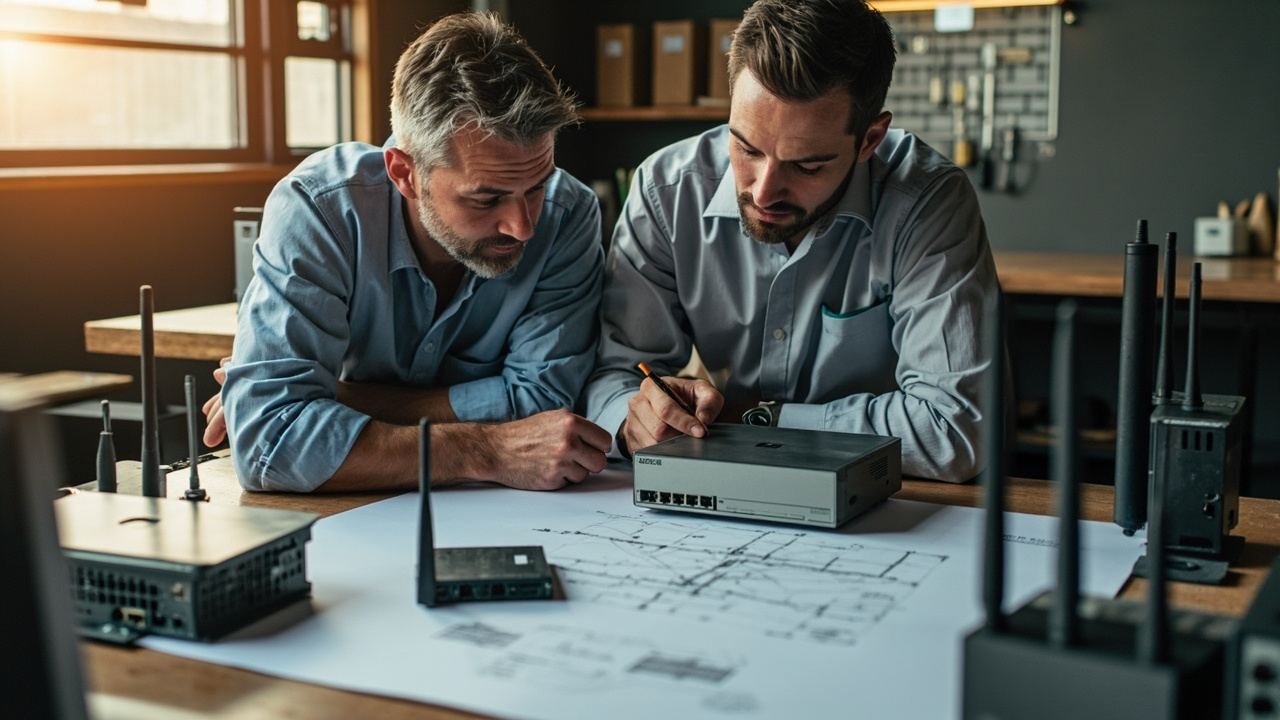
Start with the job the router must do, not with a model number. Record the site address, the mobile carriers that work there, whether the installation is fixed or moving, and whether 4G or 5G coverage has been tested. Then list every device that must connect, the required Ethernet, Wi-Fi, serial, GPIO or relay interfaces, the expected data use, and whether inbound remote access is needed. Also note the available power supply, temperature range, enclosure,…
Choosing an Industrial Router · 2026-05-20 When is a consumer modem the wrong choice for a commercial or unattended installation?A consumer modem becomes the wrong tool when the installation is expected to run unattended, survive difficult power or temperature conditions, provide secure remote access, or recover automatically after a network fault. Home devices are generally designed for a controlled room, occasional rebooting and ordinary internet use. They may not offer a metal enclosure, wide-voltage input, watchdog functions, serial or GPIO interfaces, external antenna options, …